
Sell Fast, Sell Often
A VC Liquidity Manifesto for the Post-ZIRP Era. Or: How I Learned to Stop Worrying and Love the Secondary
"Fail fast, fail often" has been Silicon Valley's mantra since before Zuckerberg was coding in his dorm room. It's the entrepreneurial equivalent of "live fast, die young" - except with more stock options and less swagger.
But here's the thing: while founders have been failing fast, VCs have been doing the exact opposite. The industry has been holding to winners forever, riding the wave, diamond-handing positions like we're HODLing Bitcoin in 2017.
However there’s something about the current liquidity crisis that ought to change this paradigm: investors better start selling fast and selling often.
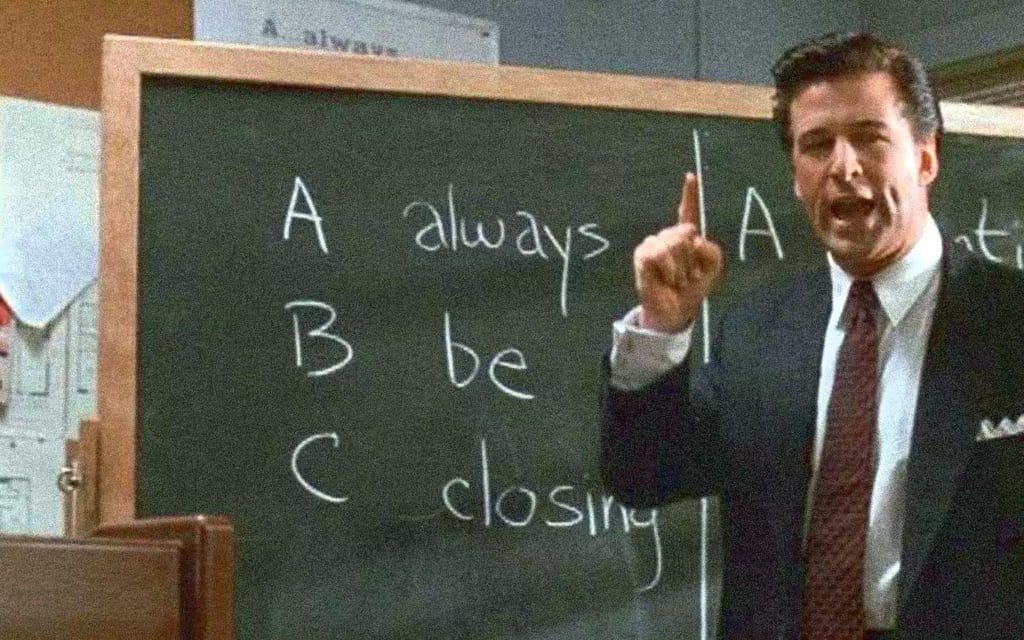
The Church of Diamond Hands & The Doom of Liquidity
For the past decade, the VC playbook has been simple: get in early, hold tight, and pray to the gods of compound growth. This worked beautifully in the ZIRP era - that magical time when money was free, valuations only went up, and WeWork was worth $47 billion (remember that fever dream?).
The gospel according to Peter Thiel was clear: the best companies generate exponential returns, so why would you ever sell? After all, selling Facebook at a $1bn valuation would have been the worst trade in venture history. The math was seductive: in a power law world, one investment returns the entire fund, so you simply cannot afford to sell your winners early.
But here's where it gets spicy: the market has changed dramatically since peak 2021-2022. Sure, the narrative around the “AI supercycle” is loud - AI accounts for >50% of VC deployment since the start of 2025 - but also masks the huge crunch in VC deployment since 2022. We’re still unsure what the AI wave will return: valuations are (crazy) high, we might end up piling cash into the Mag7 who own the infrastructure layers (GPU, data centers, computing, foundational models).
Regardless of what the AI supercycle means for VC returns, the hard data underneath VC and PE tell the story: exits have stalled. Global VC exit value fell to its lowest level in six years in 2024, just $234 billion, and PE funds are sitting on €3 trillion+ of unsold companies. Hold-periods stretch beyond seven years, locking up capital and starving limited partners of distributions. Put bluntly, TVPI is plentiful (and potentially overvalued), DPI is scarce. A median fund from the last three vintages could end up owning dozens of marked-up lines that never turn into cash.
As a result, secondary capital is no longer a niche back-stop: it set a record US $152bn of volume in 2024, almost half of it GP-led secondary continuation vehicles that allow LPs to cash in part of a line while still riding the upside.
This got me thinking about a simple solution: when underwriting a seed round, VCs should ideally already plan to sell 10-20% of that stake at 3-5× MOIC in year 2-4.
As such, amidst liquidity doom, I wanted to verify that the “hold forever” orthodoxy was not just wrong, but actively harmful in today's market.

Bps Don't Lie
“I didn’t really know that you could dance like this” Wyclef Jean
I've been running Monte Carlo simulations on random VC portfolio returns (yes, I'm fun at parties), and the results are... let's call them "counterintuitive" to the diamond hands brigade.
Here's what I modeled:
Exit timelines: Realistic 10-14 year horizons (not the fantasy 7-year exits of yesteryear)
Partial exits: Selling 15-30% at Series B/C/D valuations when companies hit certain multiples or escape velocity thresholds
The full “hold” alternative: Hold everything until exit
The results across hundreds of simulations?
IRR yields an advantage of "Sell Fast, Sell Often" of +0.79%
Now, before you say "that's nothing!" - in institutional investing, +0.79% IRR can be the difference between top quartile and median. It's the difference between raising your next fund easily and spending 18 months on the fundraising trail getting ghosted by LPs.
But wait, there's more (as they say in infomercials):
5-year DPI: Diamond hands = 0x. Sell Fast = 0.22x
7-year DPI: Diamond hands = ~0.1x. Sell Fast = 0.69x
Translation: By year 5, you’ve already started to return capital to your LPs with a “Sell Fast” approach (duh). By year 7, the "Sell Fast" strategy has returned nearly 70% of the fund while traditional VCs have returned... basically nothing except management fees invoices.
The WeWork Paradox
Let's talk about everyone's favorite cautionary tale. WeWork went from $0 to $47B to approximately the value of a Brooklyn bodega. If you were a VC in WeWork, diamond hands meant riding that rocket ship all the way back to Earth, Starship-style (minus the chopstick catcher).
But imagine - just imagine - you'd sold 15% of your position at that $47B valuation. You'd have crystallized gains at the peak, looked like a genius in retrospect, and still kept 85% of your position for the "eventual recovery" (spoiler alert: there wasn't one).
The same story played out with:
Peloton: $50B → $2B (that's a 96% drawdown for those counting)
Robinhood: $32B → $7B
Klarna: $46B → $6.7B (ouch)
In the past, I’ve been fortunate enough to partiall de-risk a position on the way up, and looking back I’m glad I did — no matter what comes next for the company in question.
The pattern is clear: in a world where valuations can vaporize faster than SBF's net worth, taking chips off the table isn't just prudent - it's survival.
The Beauty of Partial Liquidity
Here's where it gets interesting. The "Sell Fast, Sell Often" strategy isn't about maximizing absolute returns - it's about optimizing for what actually matters:
1. The J-Curve Limbo
Traditional VC funds follow a J-curve: you're underwater for 5-7 years before (hopefully) rocketing up. With partial exits, you flatten the curve and “pass the bar” to live another round/vintage.
2. The LP Happiness Index
LPs don't eat IRR - they eat DPI.
And a fund returning 0.22x by year 5 versus 0x? That's the difference between getting re-upped and getting relegated to the smaller leagues, or even never raising again.
3. The Recycling Revenue
That early DPI? You can redeploy it. Suddenly, a $10M micro-fund is operating like a $12M fund. It's like finding money in your winter coat, except the coat is a sophisticated secondary transaction and the money is millions of dollars.
4. The SPV Sugar on Top
But wait - here's where it gets even better. You don't have to choose between security and upside. Enter the SPV (Special Purpose Vehicle), a.k.a the Swiss Army knife of fund management*.
The playbook:
Identify your potential rockets at Series B/C
Sell 30-50% of the fund's position to new investors in a secondary (lock in that DPI for the fund)
Roll 50-70% into an SPV for risk-loving LPs (the same as the fund’s or new ones)
Charge carry on both (cha-ching!)
It's having your cake, eating it too, and then selling slices of that cake to people who really, really like cake.
*use with caution, I’ve hurt myself with one in the past. And I’m not talking about Swiss Army knives.
Mythbusting
"But you're leaving money on the table!"
Yes, we are. On average, -0.94x in final DPI.
Of course the performance in terms of sheer multiple gets hurt from selling early: there’s no free lunch.
But that's like saying insurance is bad because you pay premiums. The question isn't whether you're leaving money on the table - it's whether the tradeoff is worth it. I believe it is.
"This only works in down markets!"
Actually, simulations show it works in most scenarios : early DPI, slightly higher IRR and lower MOIC (on average!) tend to verify.
Holding everything definitely wins when everything exits cleanly in 6-8 years. When's the last time that happened? The Obama administration.
But while we’re navigating troubled waters, might as well take the bridge over it.
"LPs want moonshots, not singles and doubles!"
LPs want returns, period. And more importantly, they want to not look stupid at their investment committee meetings. A fund with steady DPI progression doesn't get questioned. A fund with zero DPI for 7 years? Good luck explaining that to the pension board.
The Scale Paradox (Or: This Ain't For Sequoia)
But here’s also (yet another) kicker: "Sell Fast, Sell Often" is NOT for everyone.
If you're running a $10 billion multi-stage megafund, this article isn't for you. Actually, you should probably do the exact opposite.
Think about it: Sequoia has to deploy billions. A16z needs to put $100M+ chunks to work. For them, riding winners isn't just optimal - it's existential. They NEED their Airbnbs and Stripes to take more capital every round. They NEED to double down, triple down, quadruple down. How else are you going to deploy $10 billion? $50M seed rounds? The math doesn't math.
These megafunds are playing an entirely different game. They're not optimizing for IRR or even DPI - they're optimizing for AUM and legacy. They're building dynasties, not scrupulously returning funds within 10 years. They need to catch a generation-defining company once a year, and ride along with its founders. They can afford to wait 15 years for an exit because they're raising a new $8 billion fund every 3 years anyway and LPs beg them to take their money.
But if you're reading this, you're probably not them. You're probably:
Running a sub-$100M fund (hi, fellow emerging manager!)
Actually needing to return capital to raise your next fund
Unable to lead Series B/C/D rounds with $100M checks
Incentivized on your carry, not your management fees
Fighting for allocation in hot deals, not having founders pitch YOU
Struggling to get LPs’ attention, not having them commit blindly
For us mortals, the game is different. We can't afford to wait 15 years. We can't keep doubling down. We NEED liquidity events to prove ourselves, to return capital, to raise Fund II before our kids graduate college.
This is why "Sell Fast, Sell Often" is essentially class warfare in venture capital. It's a strategy for the 99% of VCs who aren't in the oligopoly. It's David's sling against Goliath's $50B AUM.
The Cultural Revolution We Need
The biggest barrier to "Sell Fast, Sell Often" isn't mathematical - it's psychological. We've been conditioned to see selling as weakness, as "paperhanding," as missing out on the big score.
But here's the thing: venture capital isn't supposed to be a casino. It's supposed to be a sophisticated asset class that generates risk-adjusted returns. And risk adjustment means... actually adjusting for risk.
Look at the legends of prudence: Warren Buffett has built Berkshire not by chasing every mania, but by quietly exiting when the odds turned. Benchmark didn’t hold their entire Uber position to the bitter end — they sold significant chunks along the way and locked in one of the best venture outcomes of all time.
Or take La Fontaine’s tortoise — The Fables are a nightly companion for my daugthers these days. The tortoise didn’t sprint, didn’t get seduced by speed, but reached the finish line first. Caution, discipline, persistence: not glamorous, but decisive.
That’s the cultural shift we need in VC. From diamond hands to steady hands. From moonshots-at-all-costs to measured liquidity. The heroes of the next decade won’t be the ones who rode unicorns into the ground, but the ones who, like Buffett, Benchmark, or the tortoise, understood that slow and steady — plus partial liquidity — wins the race.
The heroes of the next decade won't be the VCs who held Uber from seed to IPO (though respect to them). They'll be the ones who built antifragile portfolios that survived the liquidity winter, returned capital to LPs consistently, and lived to invest another day. Unsung, unsexy heroes maybe, but still.

The Playbook for the Prudent
So how do you implement this? Here's “a” tactical guide. Feel free to create yours:
Set mechanical triggers: Once the MOIC hits 3x, sell 15%. At 7-10x, sell another 15%. No emotions, no FOMO, just process.
Use the SPV strategy for outliers: When something looks like it could 10x from here, structure it smartly.
Make connections in the secondary world: investment banks, specialized advisors, syndicates, family offices — the “secondary” part of the industry is increasingly structured. Know your way around it: those are your buyers and facilitators for such a strategy.
Track your alternative histories: For every partial sale, track what would have happened if you'd held. Learn from both your wins and losses.
Educate your LPs: Show them the math. Show them the improved risk metrics. Show them the 2021 vintage funds that are now underwater.
Frame it correctly: You're not "selling early" - you're "systematically de-risking while maintaining upside exposure."
The Punchline
Tyler Durden said "The things you own end up owning you." In venture, the positions you hold end up holding you - hostage to market cycles, liquidity events, and the whims of public markets.
"Sell Fast, Sell Often" isn't about giving up on greatness. It's about acknowledging that in a world where companies can reach $100m+ ARR under 12 months, where SPACs went from the future to the past faster than you can say “Chamath” and where "unicorn" went from rare to common to "please make it stop" - survival beats optimization.
The ZIRP era is over. The age of infinite liquidity has ended. We're now in the age of discipline, of distributions, of actually returning capital. Fundraising in 2025–26 will be brutal. The managers who embrace liquidity discipline will live to raise another fund. Those who don’t… won’t
So the next time someone tells you "only losers sell," remind them that the biggest losers are the ones still holding WeWork.
Sell fast. Sell often. Return capital to LPs. Raise again. Sleep better.
Enjoyed this contrarian take? Subscribe to Chasing Paper for more spicy perspectives on venture, finance, and the future of money.
Have a thesis on liquidity, secondaries, or why I'm completely wrong? Drop me a line, and always happy to debate over overpriced coffee in Paris or elseswhere.
Very insightful! Thank you Younès :)
In short… active management 😏